8 Best Golf Balls for Simulator in 2026
Disclosure: As an Amazon Associate we earn from qualifying purchases.
Titleist Pro V1 RCT is the pick for golfers who want soft feel, low long-game spin, and reliable short-game control.
Choosing golf balls for simulator work gets tricky when you want useful feedback without giving up the feel you like on the course. Some setups need real-ball performance, while others work better with foam or radar-specific options that match your space and practice goals.
These picks cover distance, control, alignment, and simulator-friendly practice needs.
Top Picks
Top 8 Golf Balls for Simulator Review
Pros and cons are taken from each product's listing details.

Titleist Golf Pro V1 RCT 3-Balls
“Soft feel with strong control around the greens.”
- ✓Soft feel at impact
- ✓Drop-and-stop greenside control
- ✓Mid flight trajectory
- ✓Maximum short game spin
- ✓Multi-layer construction
Titleist Pro V1 RCT 3-Balls, White is built for players who want a soft impact feel and strong control near the green. The listing highlights long, consistent drives, low long game spin, and a mid flight trajectory, which suits golfers who want a balanced ball for more than just straight distance. It also points to maximum short game spin and a polyurethane cover for added durability.
This option fits golfers who want a premium-feeling ball with dependable flight and touch. The listing also emphasizes consistent ball flight, so it makes sense for simulator sessions where you want repeatable feedback from shot to shot. Its three-ball format is also easy to sample without committing to a larger box.

TaylorMade Golf 2024 TP5x PIX Golf Balls
“Clear alignment help with fast, responsive play.”
- ✓Clearpath alignment lines
- ✓Fast 5-layer design
- ✓Low-spin driver performance
- ✓Greenside control
- ✓12 golf balls per box
TaylorMade 2024 TP5x PIX Golf Balls are aimed at golfers who want visible alignment help and a responsive feel. The listing points to a symmetrical diamond pattern, high-contrast colors, and a long center line for putting feedback. It also describes a fast 5-layer tour ball built for ball speed, low-spin driver and long-iron play, and greenside control.
This pick fits players who like seeing where the ball is aimed and how it rolls. The one dozen configuration gives you a full box, and the white, black, and orange color mix stands out in a simulator bay or on the green. It is a strong option when alignment feedback matters as much as ball response.

Callaway Golf Supersoft Golf Balls
“Soft feel with speed and short-game control.”
- ✓Fast driver and iron speed
- ✓Soft greenside feel
- ✓Hybrid cover
- ✓Enhanced approach control
- ✓Durable cover
Callaway Supersoft Golf Balls are for golfers who want a softer feel without giving up distance. The listing says the HyperElastic SoftFast Core is engineered for faster driver and iron speed, while the Hybrid Cover is described as combining maximized distance with soft feel and durability. It also notes enhanced control on approach shots and short game shots.
This ball suits players who want a gentler impact feel and easy-to-read response on shorter shots. The white finish keeps the look simple, and the overall setup leans toward all-around play rather than a narrow specialty. It is a sensible choice for simulator sessions where feel and control both matter.

GoSports Foam Golf Practice Balls
“Safe practice with realistic flight for small spaces.”
- ✓Indoor and outdoor practice
- ✓Limited flight design
- ✓True-to-life dimple texture
- ✓Storage tote included
GoSports Foam Golf Practice Balls are made for indoor golf practice and backyard training. The listing describes them as foam balls with limited flight, which makes them suited to small spaces, garages, and home golf simulators. It also highlights a realistic dimple pattern that mimics real-ball aerodynamics and a storage tote for keeping practice organized.
These are a strong fit when you want safer practice and shorter flight indoors. They are also described as useful for chipping and swing mechanics, so they work well for repetitive drills as well as casual sessions. The 16-pack gives you plenty of balls for a practice setup.
Amazon Basics Core Soft Golf Balls
“Straight flight and easy putting alignment.”
- ✓Low compression feel
- ✓Straight flight path
- ✓Short-game control
- ✓Side stamp alignment
- ✓USGA conforming
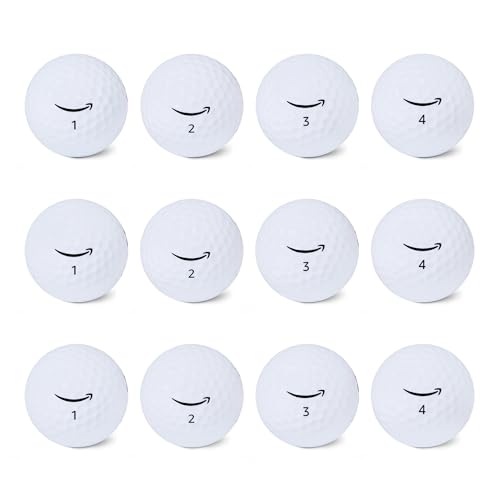
Amazon Basics Core Soft Golf Balls focus on low compression and an easy-to-track white cover. They deliver distance, a straight flight path, and a soft feel on impact. It also points to improved short game control, putting accuracy, and a side stamp alignment aid for lining up putts with confidence.
This ball suits players who want simple alignment help and an easygoing feel across the bag. The 12-pack and durable white cover make it straightforward to keep in rotation for practice or regular rounds. It is a flexible choice for different skill levels.

Golf Daddy Golf at Home Simulator
“Practice swings with feedback in tight spaces.”
- ✓AI swing analysis
- ✓No-ball practice
- ✓Fast setup
- ✓Indoor and outdoor use
- ✓Portable setup
- iNo ball practice only
- iPhone tripod setup required
Golf Daddy Golf at Home Simulator is aimed at golfers who want feedback without hitting a ball. The listing describes AI-powered swing analysis, real-time feedback, and ball-flight prediction, all built around a no-ball practice setup. It also says you can use it indoors or outdoors, which makes it useful for apartments, garages, backyards, or offices.
This pick suits players who want a training mat and swing analyzer in one portable setup. The app-based workflow is described as quick to start, so it works for daily repetition rather than full-ball play. It is a good match when you want simulator-style feedback without the space demands of a full launch setup.

Rapsodo Mobile Launch Monitor Golf Simulator
“Detailed swing data in a portable format.”
- ✓Shot-by-shot feedback
- ✓Ball speed data
- ✓Club speed data
- ✓Video replay
- ✓IPhone and iPad support
- iIPhone and iPad only
- iPremium unlocks simulator courses and game modes
Rapsodo Mobile Launch Monitor Golf Simulator is for golfers who want detailed shot feedback from a portable unit. The listing highlights ball speed, club speed, launch angle, carry distance, and shot shape data, plus video replay with shot tracer. It is also described as lightweight and easy to pack for range, backyard, or indoor net use.
This option fits players who want measured feedback and visual replay from each swing. It works with the free Rapsodo app on iPhone or iPad only, and premium unlocks simulator courses and game modes. That makes it a strong choice for players who already use Apple devices and want more data from practice.

Titleist Golf Ball 2023 Pro V1x RCT Golf Ball
“Radar-specific ball for simulator measurement.”
- ✓RCT design
- ✓Urethane elastomer
- ✓White finish
- ✓Tour model
Titleist Golf Ball 2023 Pro V1x RCT is built for radar ballistic measuring instruments only. The listing identifies it as Pro V1x RCT with a urethane elastomer cover, white finish, and Tour designation. That makes it a specialized choice rather than a general-purpose ball for every kind of practice.
This ball suits golfers or facilities that use compatible radar measurement systems such as Trackman. It is not positioned as a general play option, so it makes sense when your setup depends on radar-specific tracking. The focused design is the main reason to choose it.
How to Choose Golf Balls for Simulator Use
Match the setup
Think about how your setup measures the shot. Some practice spaces need full-flight balls, while others work better with foam or radar-specific options. The right choice depends on whether you care most about distance feedback, launch data, or simple swing rehearsal in a tight room.
Also look at how the ball is meant to behave in that space. A limited-flight practice ball can suit a garage or basement, while a standard ball makes more sense when you have room for full swings and enough clearance for the ball to travel normally.
Look at feedback tools
Many golfers want more than a ball that just rolls straight. Alignment aids, high-contrast markings, and tracer-friendly designs can make it easier to read putting lines or follow flight. That kind of visual feedback matters when you are trying to spot patterns in your swing or setup.
If you use launch data, choose a product that matches the system you already rely on. Some options are built for radar measurement, while others are aimed at simple practice without electronics. The best fit is the one that gives you usable information without adding clutter to your routine.
Choose the feel
Feel still matters indoors, even when the main goal is practice. Softer balls can feel more familiar on impact, while firmer training options may be better when you want feedback over realism.
It also helps to think about whether you want one ball for everything or a specific practice tool. Some golfers want a full-round ball for repeated simulator sessions, while others only need something for swing drills, chipping, or short-game work. A clear purpose keeps the choice simple.
More to Consider for Golf Balls for Simulator
Ball marking
If you track strike patterns, markings can matter more than you expect. A visible line, side stamp, or bold pattern can help you see aim and roll at a glance. That is useful when you are comparing setup, path, and putting direction during repeated practice.
Storage needs
Think about where the balls will live between sessions. A practice pack with a tote or a compact box can keep your space tidy and make it easier to grab what you need. This matters most when you practice often and do not want loose balls scattered around.
Device limits
When a product includes digital tracking, check the device requirements before you commit. Some systems work only with certain phones or tablets, and some features may sit behind a separate unlock. That is worth knowing early so the setup fits the gear you already own.
Common Mistakes to Avoid When Buying Golf Balls for Simulator
Buying for looks
It is easy to focus on color or pattern and miss the real job of the ball. A bright design can help with visibility, but it should still match how you practice and what your setup measures. Choose based on flight, feedback, or practice style first, then decide whether the look helps you.
Ignoring practice space
A ball that works on a full course may not suit a garage, basement, or small simulator bay. If your space is tight, limited-flight or foam options make more sense than a standard ball that needs room to travel. Measure the room and match the product to that space.
Chasing extra features
It is tempting to pick the option with the most bells and whistles, but not every feature helps your session. Alignment aids, video replay, or app feedback are useful only if you will use them. Focus on the features that match your routine instead of paying attention to extras you may ignore.
Frequently Asked Questions
What should I look for in a ball for a simulator?
Start with how your space and system work together.
Which option is better for putting alignment?
TaylorMade adds a symmetrical diamond pattern and a long center line for easy-to-see feedback lines while putting. Amazon Basics includes a side stamp alignment feature that helps line up putts with confidence. Those are the two clearest choices if you want help starting the ball on line.
Which pick is better for soft impact feel?
Callaway emphasizes a soft greenside feel through its HyperElastic SoftFast Core and Hybrid Cover, while Titleist highlights a soft feel at impact with control around the greens. Amazon Basics also says its low compression build delivers a soft feel on impact. Those three are the clearest matches for a softer strike sensation.
Which one is made for radar tracking?
Titleist Golf Ball 2023 Pro V1x RCT is the clear radar-specific choice because it is listed for radar ballistic measuring instruments only. That makes it different from the general practice and launch-monitor options, which are aimed at broader feedback or training needs instead of that specific measurement setup.
Which picks work best for indoor training?
GoSports is designed for indoor golf practice, small spaces, and home golf simulators. Golf Daddy is also built for indoor use because it supports no-ball practice in apartments, garages, and offices. Rapsodo can work indoors with an indoor net, so it fits a more data-heavy setup.
Final Verdict
Titleist Pro V1 RCT is the strongest all-around pick here because the listing combines long, consistent drives, soft feel, mid flight trajectory, maximum short game spin, and a multi-layer polyurethane cover. It fits golfers who want a premium-feeling ball with control across the course and useful consistency for simulator work.